




Success Story – From Battery to System: Building a Reliable Power Solution for Mobile Payment Terminals
Engineering a Market-Ready Battery Solution for Next-Generation Mobile Payment Terminals
A proven battery solution designed for real-world performance and reliability.
Market Trend and Customer Background
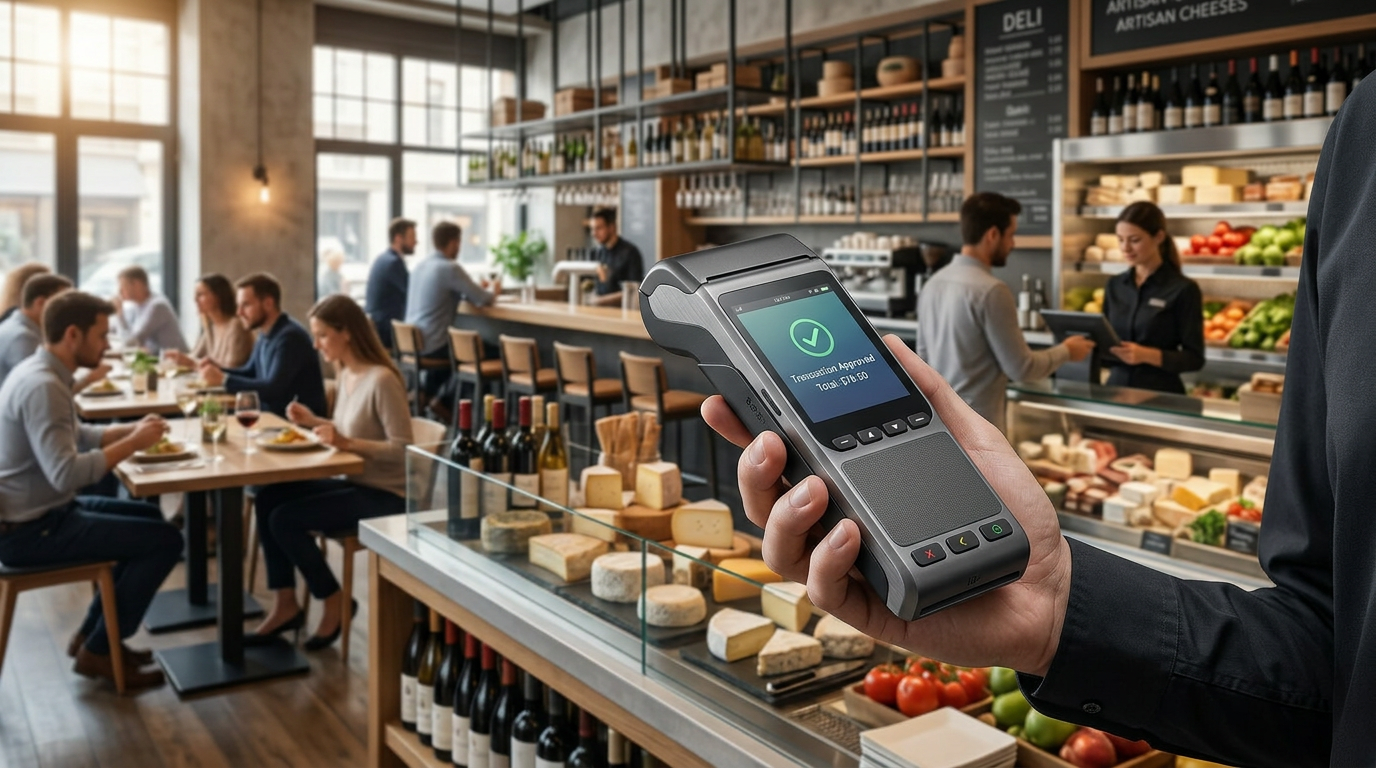
According to Cognitive Market Research , the global POS battery market is projected to grow from USD 905.6 million in 2021 to USD 2.61 billion by 2033, representing a CAGR of 9.234%. This growth is driven by the increasing adoption of mobile POS (mPOS) systems, cashless and contactless payments, and demand across retail, hospitality, and logistics. Our customer develops advanced mobile payment terminals for retail and hospitality applications. Unlike traditional countertop POS terminals, these compact devices allow service staff to perform ordering, payment, and transaction processing directly at the table or anywhere within the service area. For these mobile payment devices, the rechargeable battery directly affects operating time, mobility, reliability, and user experience. With requirements for all-day operation, frequent charging, repeated handling, and tight mechanical constraints, battery performance and system integration are critical to the overall product design.
The Challenge: More Battery Capacity in the Same Space
Atemitech was challenged to increase battery capacity within the existing battery dimensions while meeting stringent reliability requirements. Because the available space inside the payment terminal was already defined, increasing battery thickness or overall dimensions was not an option. Atemitech therefore optimized multiple aspects of the battery solution, including:
- Cell selection
- Battery pack design
- Mechanical integration
- Charging integration
- Testing and validation
The new platform also introduced more stringent reliability requirements based on lessons learned from previous product generations. This required Atemitech to approach the project as a complete battery integration and system-level engineering program rather than a simple battery replacement.
Atemitech Solution: Beyond the Battery Pack
Atemitech developed a customized rechargeable lithium-ion battery solution based on the actual operating conditions of the mobile payment terminal.
The engineering scope covered:
Battery Design → Mechanical Integration → Charging Integration → Testing & Validation
In addition to capacity and runtime, Atemitech assessed charging performance, cycle life, mechanical constraints, and the battery-to-enclosure interface to ensure reliable system integration. The terminal also used a docking-based charging architecture, requiring the battery, charging system, and mechanical structure to work together as an integrated solution. By considering the complete device rather than the battery alone, Atemitech developed a battery pack optimized for the terminal's real-world operating environment.
System-Level Validation: Finding Problems Beyond the Battery
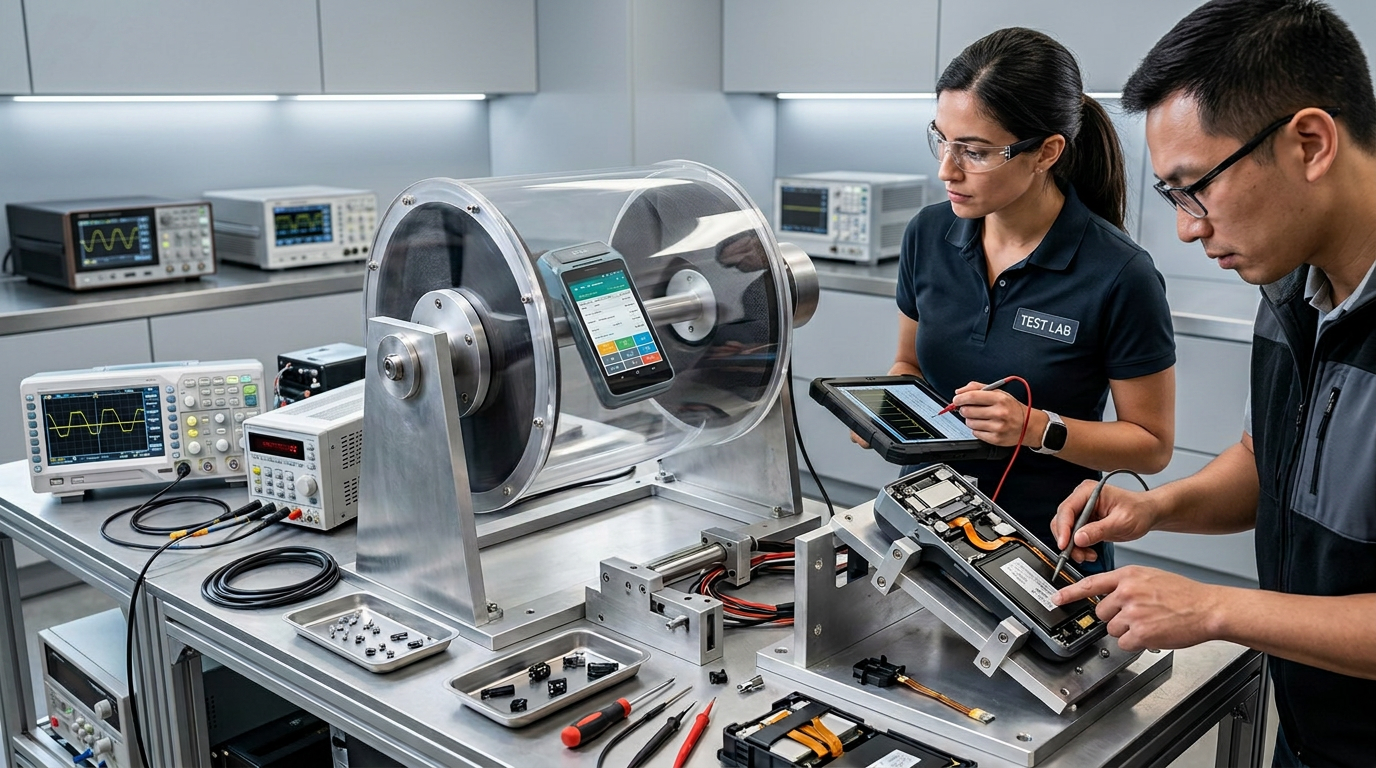
One of the key lessons from this project was that battery reliability cannot always be evaluated by testing the battery pack alone. To better simulate real-world usage, Atemitech worked with the project team to clarify requirements and develop additional system-level validation scenarios. One important test involved approximately 2,000 rolling cycles of the complete payment terminal to simulate repeated mechanical stress during handling, transportation, and daily operation. The test evaluated the complete system, including the display, keyboard, battery, internal structure, and other critical components. During testing, Atemitech identified a mechanical reliability issue that could not have been easily detected through battery-level testing alone. The battery retention mechanism did not provide sufficient mechanical stability under repeated stress, causing the battery assembly to gradually shift out of position. Importantly, the battery itself was not the root cause. The issue existed at the interface between the battery pack and the mechanical structure of the payment terminal. This system-level validation approach enabled Atemitech to identify and address a potential reliability issue before mass production.
Engineering the Solution
After identifying the root cause, Atemitech redesigned the battery retention approach and optimized the interface between the battery pack and the terminal structure. The engineering team completed multiple rounds of mechanical adjustment, testing, and verification while maintaining the required battery dimensions. The revised mechanical structure improved battery retention under repeated mechanical stress and successfully passed the customer's validation requirements.
We do not stop at the component boundary.
When battery reliability is influenced by mechanical design, charging performance, or actual device usage, Atemitech investigates the complete system to identify the true root cause and develop the appropriate solution.
Designed for Long-Term Daily Operation
Cycle life was another important consideration for the mobile payment terminal. These devices can experience intensive daily use and repeated charging, making battery degradation an important factor in product lifetime and maintenance requirements. Through cell selection, battery design optimization, and validation, Atemitech's solution achieved approximately 500 charge-discharge cycles, providing a strong foundation for long-term commercial operation. Combined with higher battery capacity within the existing mechanical dimensions, the solution helped support longer operating time and service life without requiring a major redesign of the payment terminal.
Results: From Battery Supplier to Engineering Partner
The project demonstrated Atemitech's ability to support mobile payment device manufacturers as a system-level battery engineering partner, rather than simply supplying a battery pack.
Key Results
- Higher battery capacity within the original battery dimensions
- Approximately 500 charge-discharge cycles
- 2,000 rolling-cycle system validation to evaluate mechanical reliability
- Improved battery retention under repeated mechanical stress
- Compatibility with the terminal's docking-based charging architecture
- Integrated battery, mechanical, charging, and system-level engineering
- Successful validation under enhanced reliability requirements
Most importantly, the project demonstrated the value of treating battery development as a system-level engineering discipline. By combining battery expertise with mechanical integration, testing, validation, and root-cause analysis, Atemitech helped identify and resolve a reliability issue beyond the original battery specification before it could become a potential field problem.
More Than a Battery: A Complete Power Solution
For compact mobile payment devices, increasing battery capacity is rarely as simple as selecting a larger cell. Space limitations, mechanical stress, charging architecture, cycle life, and product design all influence battery reliability. A reliable mobile payment battery solution therefore requires more than cell selection. Atemitech combines cell selection, battery pack engineering, mechanical integration, charging integration, and system-level validation to develop customized power solutions for next-generation mobile payment devices. From battery design to system-level validation, Atemitech helps customers transform battery technology into reliable, production-ready power solutions.
Related information
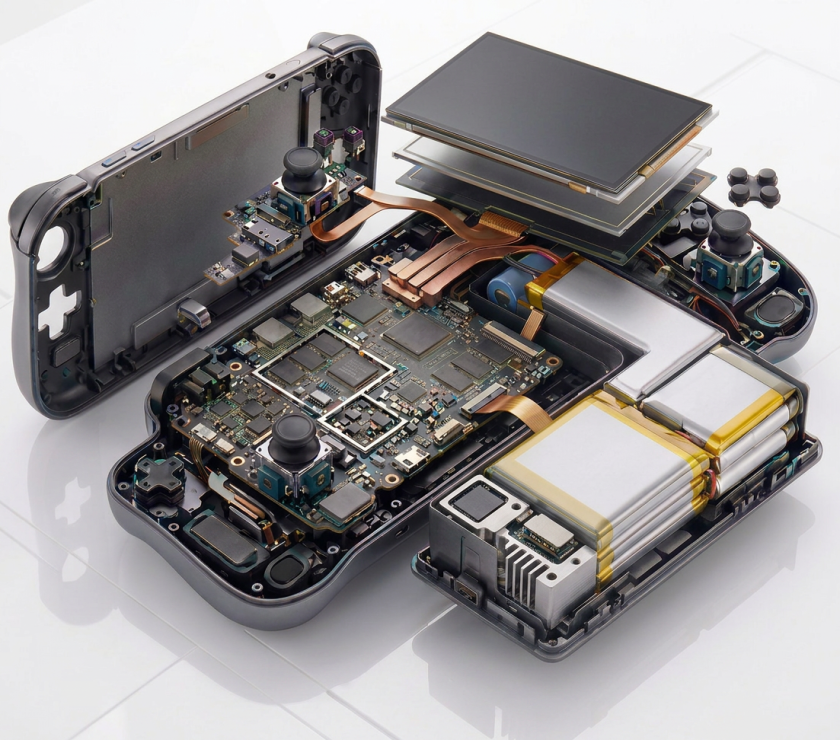
Success Story – Overcoming Space Constraints with a High-Performance Battery Solution for Handheld Gaming Devices
As portable entertainment devices become more powerful, limited space and battery life become key challenges. Atemitech addresses them with customized battery solutions.
Success Story – A Decade of Engineering Medical Innovation
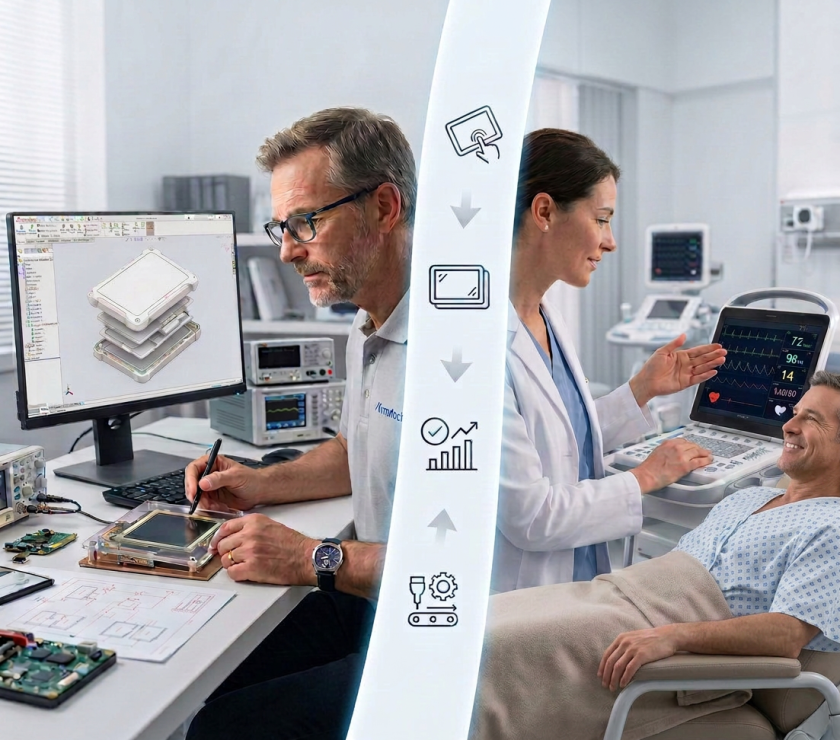
For nearly a decade, Atemitech has partnered with a leading global healthcare company to develop advanced medical touch display solutions. Backed by ISO 13485-certified quality management and engineering expertise, Atemitech delivers reliable, innovative solutions that help customers build safer and smarter next-generation medical devices.
Success Story – Next-Generation AI Server Mechanical Design
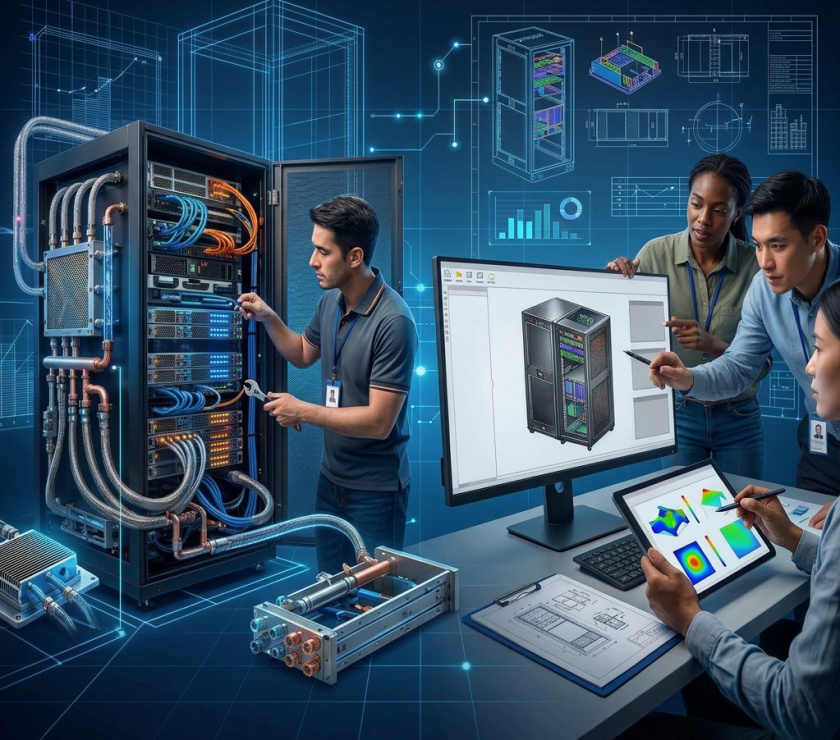
Atemitech partnered with a Tier-One AI server and liquid cooling provider to co-develop a next-generation rack-level liquid cooling solution for high-density AI data centers. Through its R&D-to-R&D Co-Work model, Atemitech optimized mechanical design, enhanced thermal integration, and applied Design for Manufacturability (DFM) principles to accelerate product development and streamline production. The collaboration improved structural reliability, manufacturing efficiency, product quality, and assembly processes. By combining engineering expertise, precision manufacturing, and effective project management, Atemitech transformed complex thermal and mechanical challenges into scalable, production-ready solutions, reinforcing its position as a trusted engineering partner for next-generation AI infrastructure.