



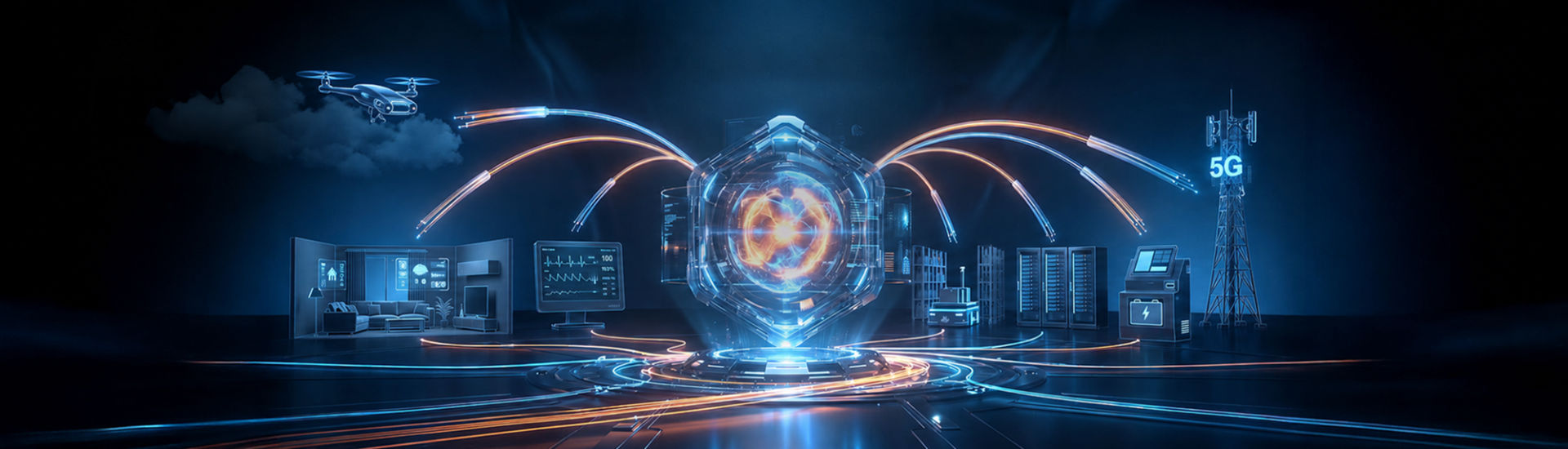

Technology Insight – Concealed Touch Through Glass: Sensor, Structural, and Signal Integration
Concealed Long-Distance Touch Solutions
Through-Glass Touch for Transportation Industry
When conventional buttons become difficult to protect, integrate, or maintain, touch technology can be engineered into the structure itself.
Atemitech develops concealed, long-distance capacitive touch solutions that enable touch detection through glass, air gaps, decorative panels, and equipment housings. By moving the sensing interface behind the surface, our technology helps transportation and outdoor equipment manufacturers reduce exposed buttons, improve environmental protection, and achieve greater flexibility in industrial design. From rail transit and road transportation to bicycles and other personal mobility devices, Atemitech provides application-specific engineering across sensor design, mechanical structure, electrical optimization, and touch recognition.
Why Concealed Touch
Traditional mechanical buttons and exposed touch interfaces can create challenges in transportation and outdoor applications. Repeated operation can lead to mechanical wear, while exposed buttons and the gaps around them can allow water, dust, and other contaminants to enter the equipment. Rain and moisture can also affect capacitive sensing and cause false touches. At the same time, metal structures, displays, power systems, and surrounding electronics can introduce electrical noise that affects touch stability. For vehicle and equipment designers, exposed buttons can also limit industrial design flexibility while increasing requirements for cleaning, maintenance, impact protection, and vandal resistance. Atemitech addresses these challenges by integrating the touch sensing system behind the visible surface rather than directly on it.
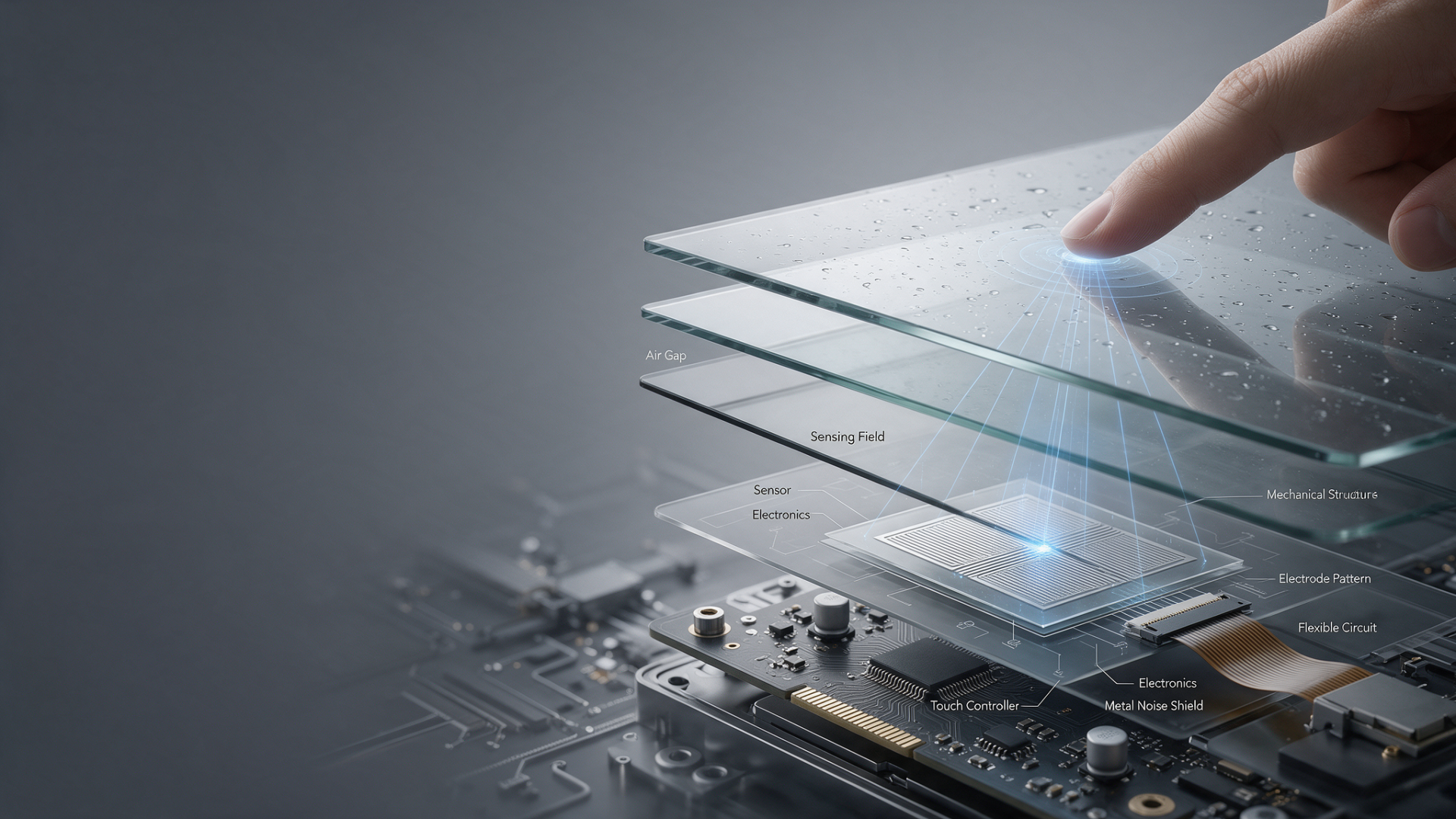
Atemitech Concealed Touch Technology
Reliable long-distance touch requires more than simply increasing sensing distance. The sensor, mechanical stack-up, electrical environment, and touch recognition algorithms must work together as one system. Atemitech approaches this through five interconnected capabilities.
Long-Distance Through-Glass Touch
Atemitech extends capacitive touch detection through multiple layers of glass, air gaps, and decorative materials, allowing the sensing element to be concealed inside a glass structure, decorative panel, vehicle body, or equipment housing while maintaining a natural touch interface. A validated prototype demonstrated reliable sensing through a Sensor–Glass–Glass–Air Gap–Glass–Finger stack-up, corresponding to approximately 60 mm of glass-equivalent sensing distance after dielectric-constant conversion. This approach enables touch interfaces to be integrated into areas where conventional exposed buttons would be difficult to implement.
Customized Sensor & Structural Design
Every application has a different mechanical stack-up. Glass thickness, the number of layers, air gaps, decorative materials, metal structures, and installation conditions can all affect touch performance. Rather than applying one standard sensor design to every product, Atemitech engineers the sensor pattern, electrode layout, ground structure, sensor material, and mechanical stack-up around the actual application. We select between ITO film and metal mesh solutions and optimize the design for sensitivity, transparency, cost, mechanical integration, and industrial design.
Electric Field & Noise Optimization
Long-distance touch sensing must maintain signal integrity within a complex electrical environment. Transportation equipment can contain metal structures, displays, power systems, motors, wiring, and other electronic components that interfere with capacitive sensing. Atemitech therefore optimizes the overall sensing environment through grounding design, electric field optimization, hardware filtering, sensor tuning, and touch controller configuration. These measures improve the signal-to-noise ratio and allow the system to distinguish genuine touch events from surrounding electrical interference.
Wet-Environment & False-Trigger Suppression
Rain and moisture can change the electrical characteristics around a capacitive sensor and generate unwanted touch signals. For outdoor transportation and mobility applications, Atemitech combines sensor design, controller tuning, and firmware algorithms to evaluate signal behavior and environmental changes. This approach helps reduce false triggers caused by rain, water droplets, humidity, environmental noise, and accidental contact, keeping concealed touch interfaces stable in demanding outdoor environments.
Intelligent Touch Recognition
Reliable touch interaction requires more than detecting a change in capacitance. Atemitech’s recognition approach evaluates touch duration, signal strength, signal stability, and environmental conditions to determine whether a detected event represents genuine user intent. This helps reduce false activation and improve the consistency of touch operation in real-world environments.
Application Scenarios
Concealed long-distance touch technology can be integrated into a wide range of transportation and mobility platforms where exposed buttons are difficult to protect or integrate, as well as into outdoor equipment where durability and industrial design are equally important.
Rail Transit
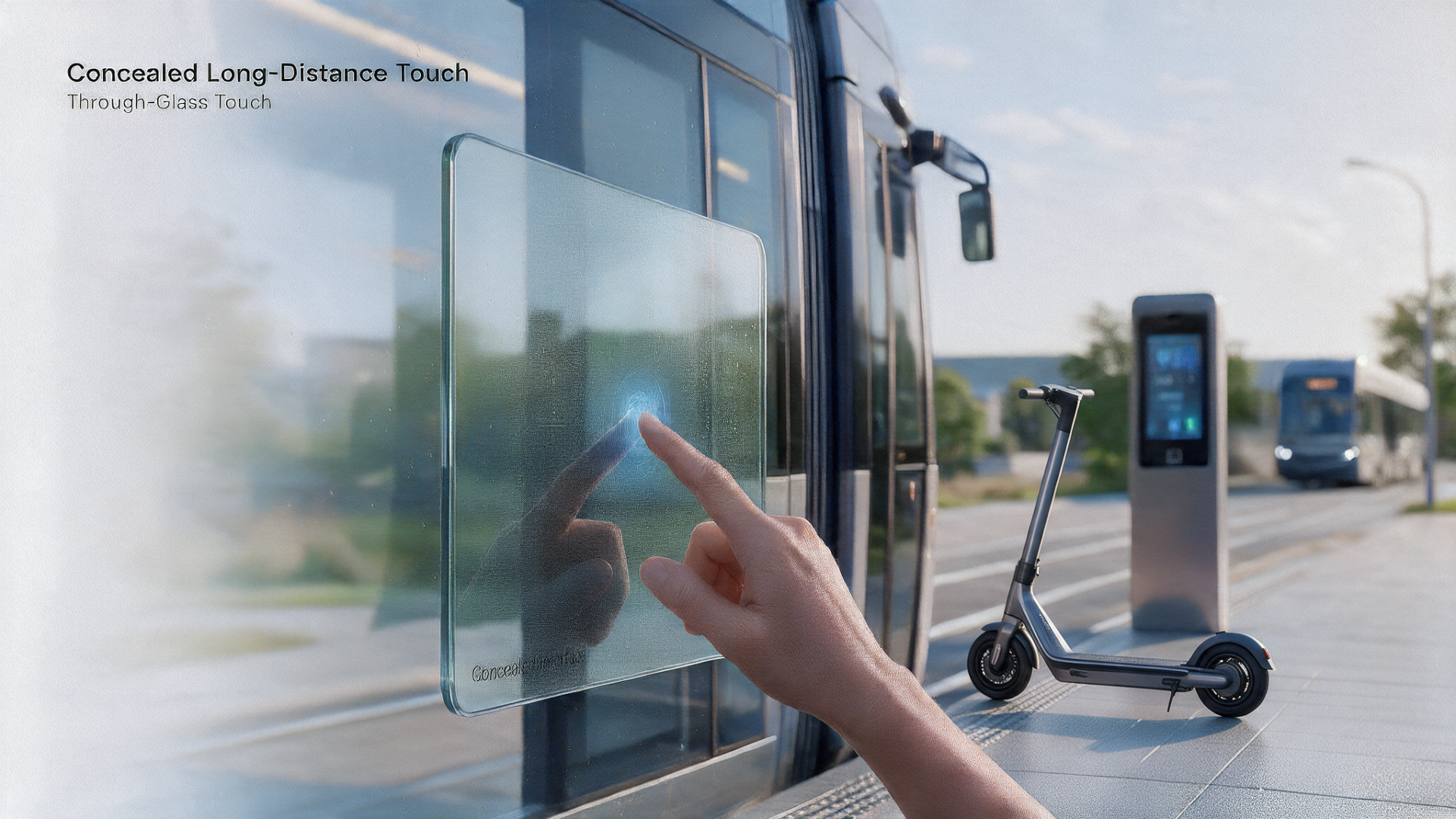
For rail transit applications such as light rail, metro systems, and other passenger rail vehicles, concealed touch can be integrated into interior or exterior glass surfaces, positioning the sensing element behind the glass structure to eliminate the need for exposed mechanical buttons and reduce potential openings where water and contaminants could enter.
Potential applications include:
● Door-open controls
● Passenger interface controls
● Touch-to-activate functions
● Concealed control panels
Road Transportation
For buses, coaches, specialty vehicles, and other road transportation systems, concealed touch provides an alternative approach to vehicle control interfaces. By integrating the sensor behind glass or structural materials, manufacturers can achieve a cleaner interface while reducing exposure to weather, impact, and frequent physical operation.
Applications can include:
● Door controls
● Passenger access interfaces
● Exterior control panels
● Driver or operator interfaces
● Vehicle access and activation functions
Personal Mobility
The same technology can be applied to bicycles, e-bikes, scooters, shared mobility vehicles, and other personal transportation devices. A concealed touch sensor integrated into the frame or housing keeps the sensing element protected inside the structure, reducing exposure to rain, dust, vibration, and physical damage while eliminating the need for an exposed keypad or mechanical button.
For example, it can support:
● Touch-to-unlock functions
● Vehicle access
● Control activation
● User interaction interfaces
Outdoor & Public Equipment
Beyond transportation, concealed touch technology can be applied to outdoor equipment where durability, environmental protection, and industrial design are important. Integrating the touch interface behind glass, panels, or protective structures creates a more seamless and durable user interface. Potential applications include:
● Public information equipment
● Outdoor kiosks
● Access control equipment
● Smart infrastructure
● Shared public facilities
● Outdoor industrial equipment
Why Atemitech
A reliable concealed touch solution requires more than sensing distance. Atemitech combines touch technology, electronics, mechanical engineering, and structural integration to develop application-specific solutions. By integrating touch sensing behind glass or protective structures, we help manufacturers reduce exposed components, improve environmental protection, and achieve greater design flexibility. Our system-level approach optimizes sensing, electronics, firmware, and mechanical integration for reliable performance across transportation, personal mobility, and outdoor applications—from concept and engineering development through production.
Related information
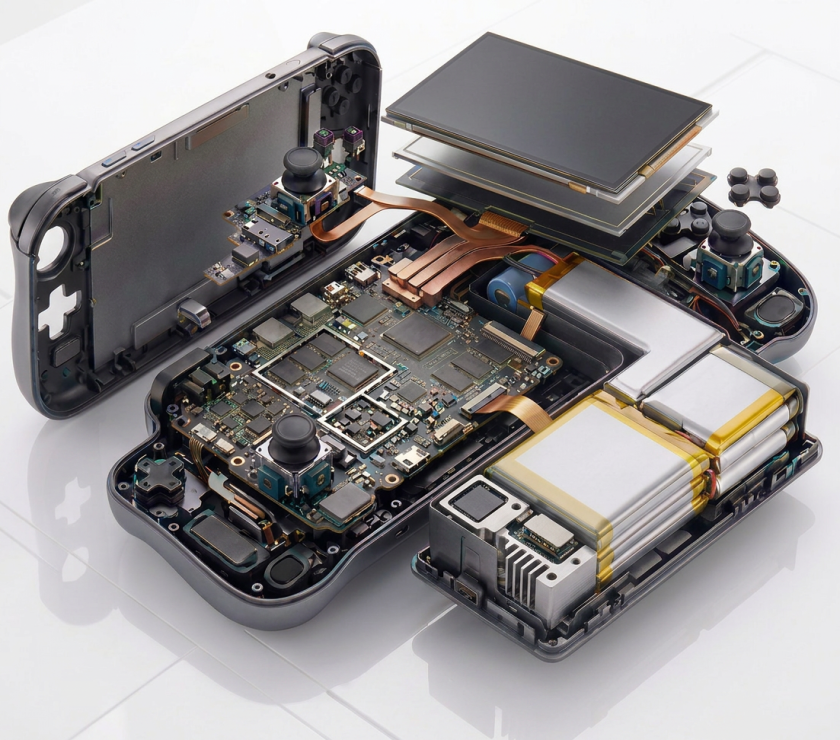
Success Story – Overcoming Space Constraints with a High-Performance Battery Solution for Handheld Gaming Devices
As portable entertainment devices become more powerful, limited space and battery life become key challenges. Atemitech addresses them with customized battery solutions.
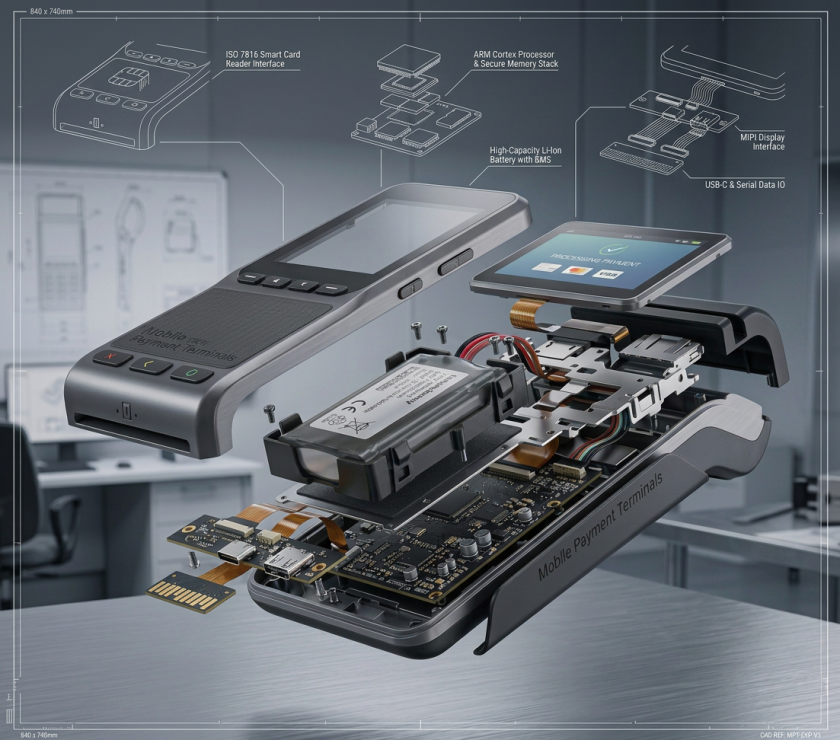
Success Story – From Battery to System: Building a Reliable Power Solution for Mobile Payment Terminals
As mPOS adoption grows, mobile payment terminals require longer battery life, reliability, and efficient space utilization. Atemitech optimized battery capacity within existing space constraints and integrated the battery, mechanical structure, and charging system to deliver a reliable, production-ready power solution.
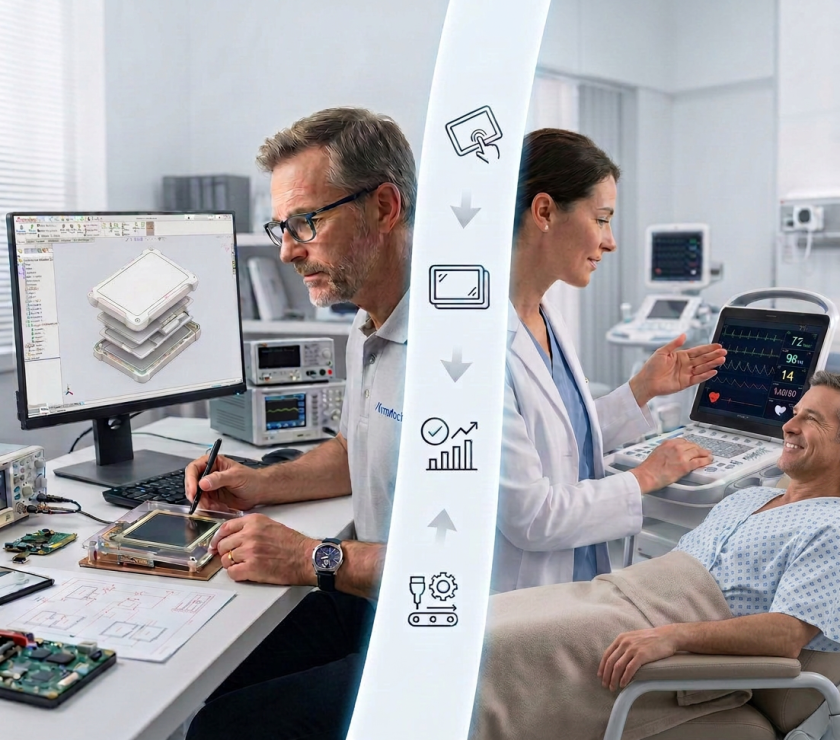
Success Story – A Decade of Engineering Medical Innovation
For nearly a decade, Atemitech has partnered with a leading global healthcare company to develop advanced medical touch display solutions. Backed by ISO 13485-certified quality management and engineering expertise, Atemitech delivers reliable, innovative solutions that help customers build safer and smarter next-generation medical devices.