




UAV Peripheral Structures
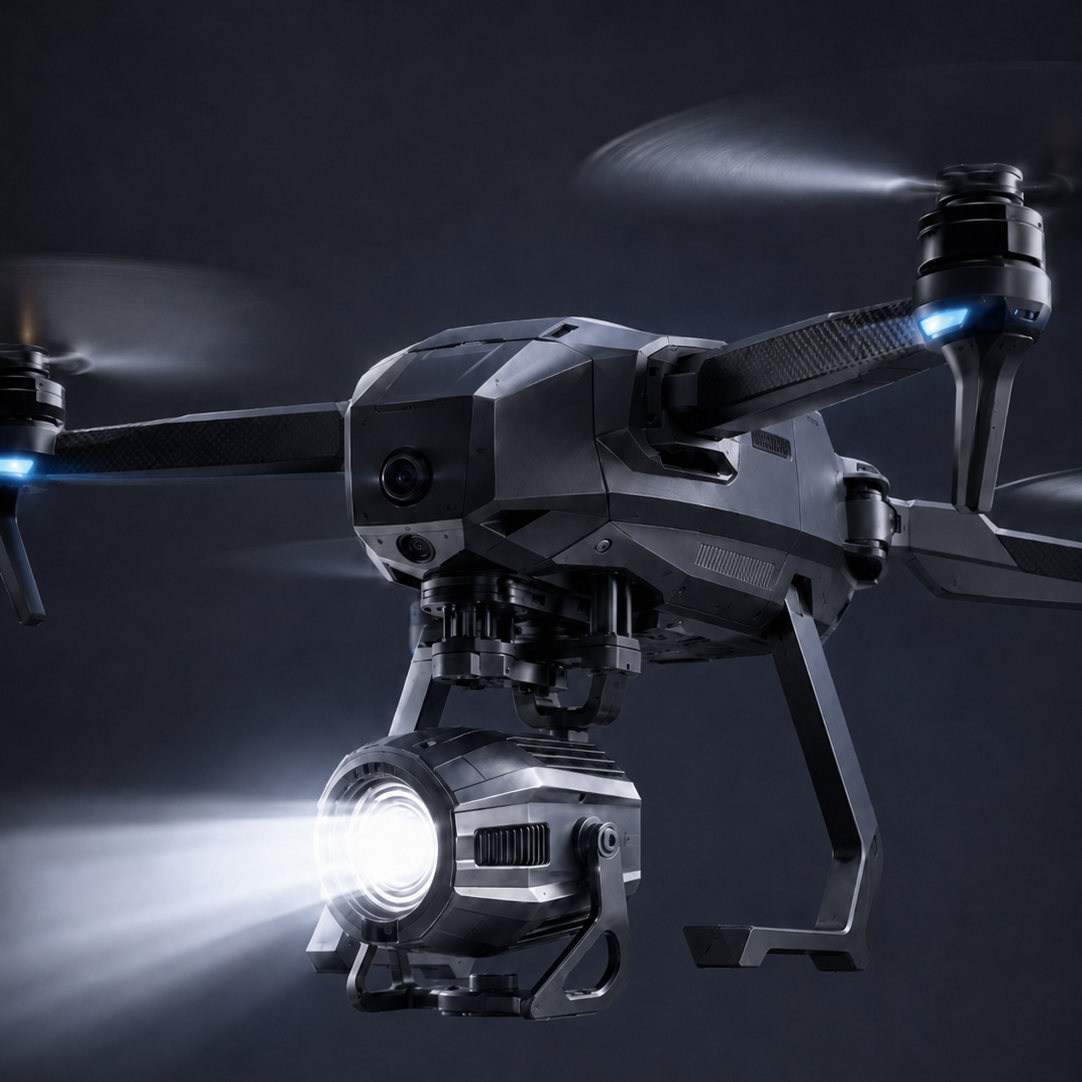
5500lm high-intensity searchlight: Active thermal flow control algorithm
Drones prioritize mission reliability, and when seeking high-brightness lighting within an enclosed structure, two challenges arise:
- Thermal bottleneck leading to light decay: High-brightness LEDs generate significant heat sources within enclosed structures. Without an efficient thermal path, the junction temperature of LEDs will be too high, causing light decay, shortened lifespan, and even mission failure at night.
- Solder joint waterproof failure: Off-the-shelf LED strips often have defective solder joints, which easily fail in vacuum or high-pressure waterproof tests in harsh environments—a fatal risk for nighttime missions in adverse weather.
Solution: Design optics, mechanisms, and thermal management as an integrated system
- High-efficiency optical performance: High-power, high-spec LED sources are used to output 5500 lm of luminous flux in a lightweight package of approximately 120 g, providing long-range illumination of 4 lux at 100 meters.
- Precision thermal management and algorithms: Use of thermal paste and pads with high thermal conductivity (over 20–30 W/mK) and the introduction of graphene materials. These are coupled with an active cooling hardware thermal control algorithm that dynamically adjusts power to help maintain stable brightness output and mitigate light decay caused by high temperatures.
- Integrated electro-optical-mechanical design: Replace off-the-shelf LED strip solder joints with an integrated structure with high air-tightness, and pass full air-tight SOP tests to effectively reduce the risk of leakage.

Atemitech Corporation provides a drone mission searchlight weighing only 120 g with a luminous flux of 5500 lm. It incorporates graphene high thermal conductivity materials and an active cooling thermal control algorithm to solve the light decay bottleneck; the integrated air-tight structure passes vacuum air-tight tests.
High-decibel lightweight drone loudspeaker: Non-magnetic technology to reduce EMI interference
To clearly broadcast from a drone in the air, traditional audio solutions present two conflicting issues:
- Severe EMI interference: Traditional dynamic speakers (weighing about 290 g) contain strong magnets that easily cause electromagnetic interference with the drone's internal electronic compass, IMU, and GPS signals, affecting flight stability and positioning.
- Sound pressure and weight imbalance: With a strict lightweight (<100 g) constraint, achieving the high sound pressure and clarity necessary for long-distance broadcasting is challenging.
Solution: Redesign the sound unit instead of enlarging the speaker
- Lightweight and interference-resistant design
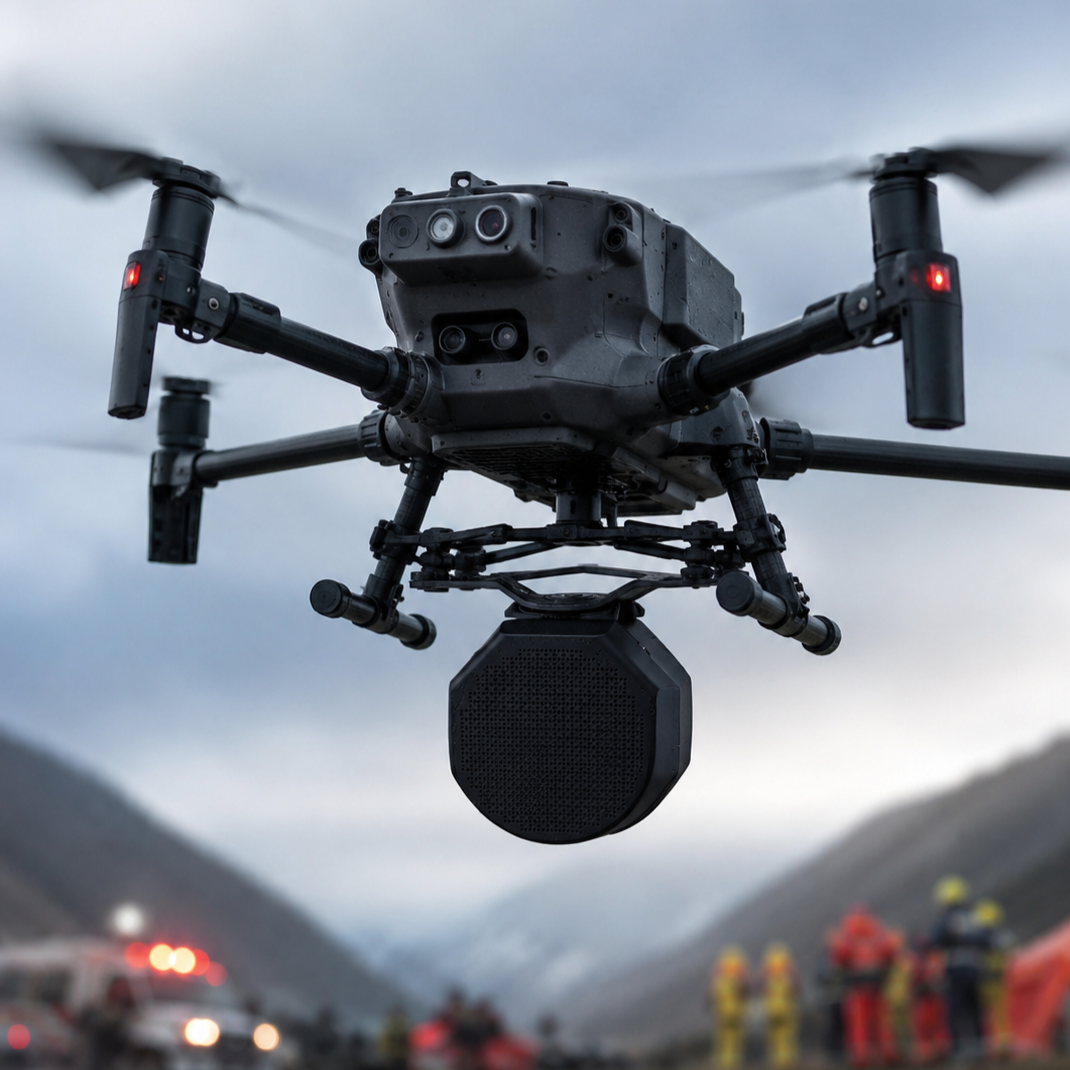
The customized high-decibel speaker optimizes magnetic grids, suspensions, and voice coil design; driven by special materials, it uses a super lightweight phenolic cone to achieve a non-magnetic, low EMI interference design, helping to reduce magnetic interference with flight control components and ensuring stable high sound pressure output under conditions <100 g. - Acoustic and structural optimization.
Selects high-efficiency amplifiers and audio DSP (integrating active noise reduction and echo cancellation algorithms) to enhance distant clarity; uses lightweight SABIC engineering plastics and carbon fiber shock-resistant structures for the casing, complying with IP55 waterproof and dustproof design.
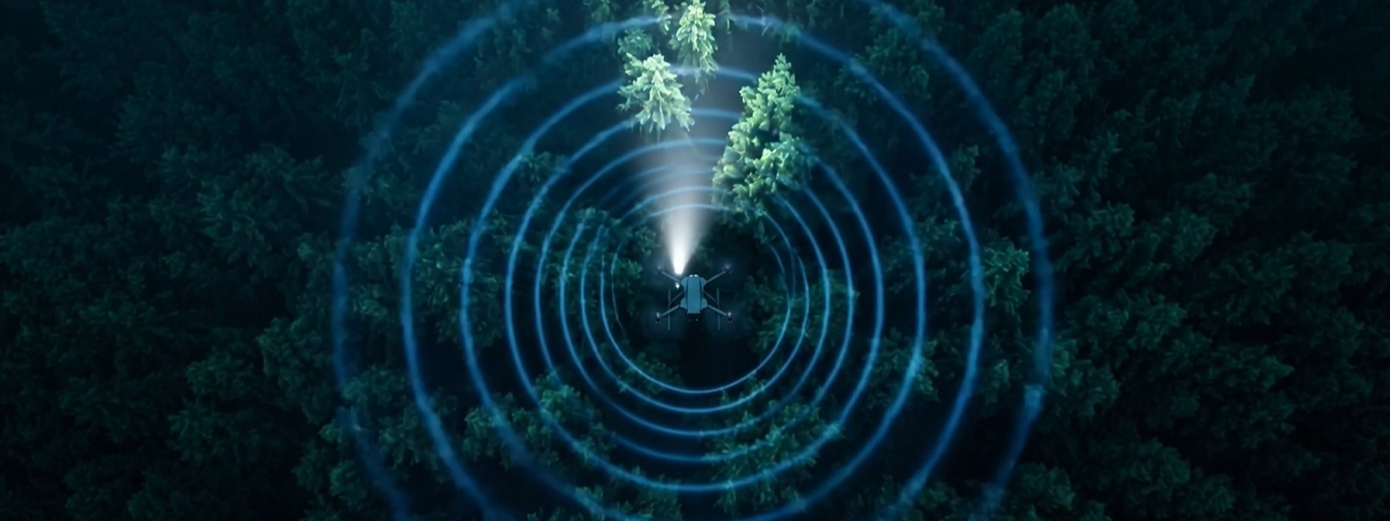
Atemitech has specially designed a <100 g high-decibel megaphone for drones used in security and rescue, featuring active noise reduction DSP and an engineering plastic shockproof structure, complying with IP55 grade weather-resistant design.
For drones requiring precise navigation and mapping, positioning quality directly determines mission success, but two issues have long existed:
- Signal blockage and multipath effects: Traditional single-frequency satellite positioning accuracy is easily affected by ionospheric reflections and obstructions such as tall buildings or mountainous areas, resulting in positioning drift of several or even tens of meters, making centimeter-level precise landing impossible.
- High friction of cross-platform introduction: Differences in communication protocols and hardware RF interfaces among flight control systems from different manufacturers result in lengthy system integration processes and high friction costs.
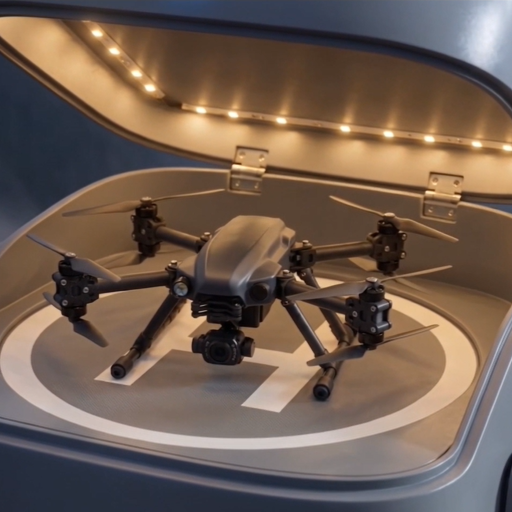
Solution: Hardware signal quality + universal software interface.
- Centimeter-level positioning: Based on high-end chips like Mosaic X5, supporting multi-frequency multi-constellation GNSS signals; combined with real-time kinematic RTK technology and base station differential signal compensation, maintaining centimeter-level precision in motion.
- Hardware RF signal gain: Built-in high-gain, low-noise GPS antenna, integrated with low-noise amplifier LNA, enhances weak satellite signals, strengthens anti-interference and anti-multipath capabilities, assisting rapid satellite locking in weak signal environments such as mountainous or urban canyons.
- Universal software API interface: Self-developed flexible interfaced hardware low-level software drivers, compatible with mainstream industrial and military-grade flight control systems, reducing customers' communication compatibility development costs.
Addressing the pain points of traditional GPS positioning drift and susceptibility to interference, this module assists drone manufacturers in upgrading autonomous navigation, terrain following, and high-precision mapping capabilities in a shorter timeframe through stable RF signal quality and cross-platform compatibility.

The high-precision drone RTK positioning module based on the Mosaic X5 series chip supports multi-frequency multi-constellation GNSS, with a built-in low-noise amplifier LNA to enhance weak signals, and provides a universal flight control software API interface to reduce cross-platform integration friction.
Precision drone components and anti-noise wiring harnesses: Subsystems are pre-assembled and co-developed according to requirements.
The reliability of a drone often does not depend on a single component itself, but rather on the integration of its accessories—whether the mechanical housing, seals, heat sinks, and transmission harnesses are designed and verified as a cohesive system.
Atemitech was established specifically to address 'design adjustments and development together with customer demands': both mechanical parts and cable harnesses can be customized according to different bodies and tasks.
Precision mechanical parts
Pain point: Difficulties in processing special materials and maintaining strict tolerances
Challenges in processing special materials: Carbon fiber tends to delaminate and form burrs during CNC machining, while magnesium-aluminum alloys pose high ignition and dust explosion risks, making traditional manual polishing unfeasible.
Deformation and stringent tolerances: Aerospace aluminum alloys (such as 6061-T651) and titanium alloys tend to experience elastic recovery and thermal stress deformation due to stress release during cutting, making it difficult to maintain the shape and position tolerances of critical fitting areas like flameproof surface grooves within 0.3 mm.
Solution
Advanced cutting tools and dedicated fixture systems:Special tools and anti-deformation vacuum fixtures have been developed for carbon fiber and titanium alloys. The machining of magnesium-aluminum alloys is optimized through dynamic parameter computation throughout the process, utilizing integrated machine tools for direct precision milling, eliminating manual polishing procedures, and significantly reducing dust explosion risks.
Aerospace-grade surface treatment and measurement SOP: Anodizing (oxidation film thickness 15–25 µm) is employed to meet surface roughness requirements for flameproof surfaces (Ra<6.3). Factory inspection incorporates ZEISS coordinate measuring machines and Creaform handheld blue light scanners to achieve a measurement accuracy of 0.025 mm, providing a complete digital record of geometric tolerances (GD&T).
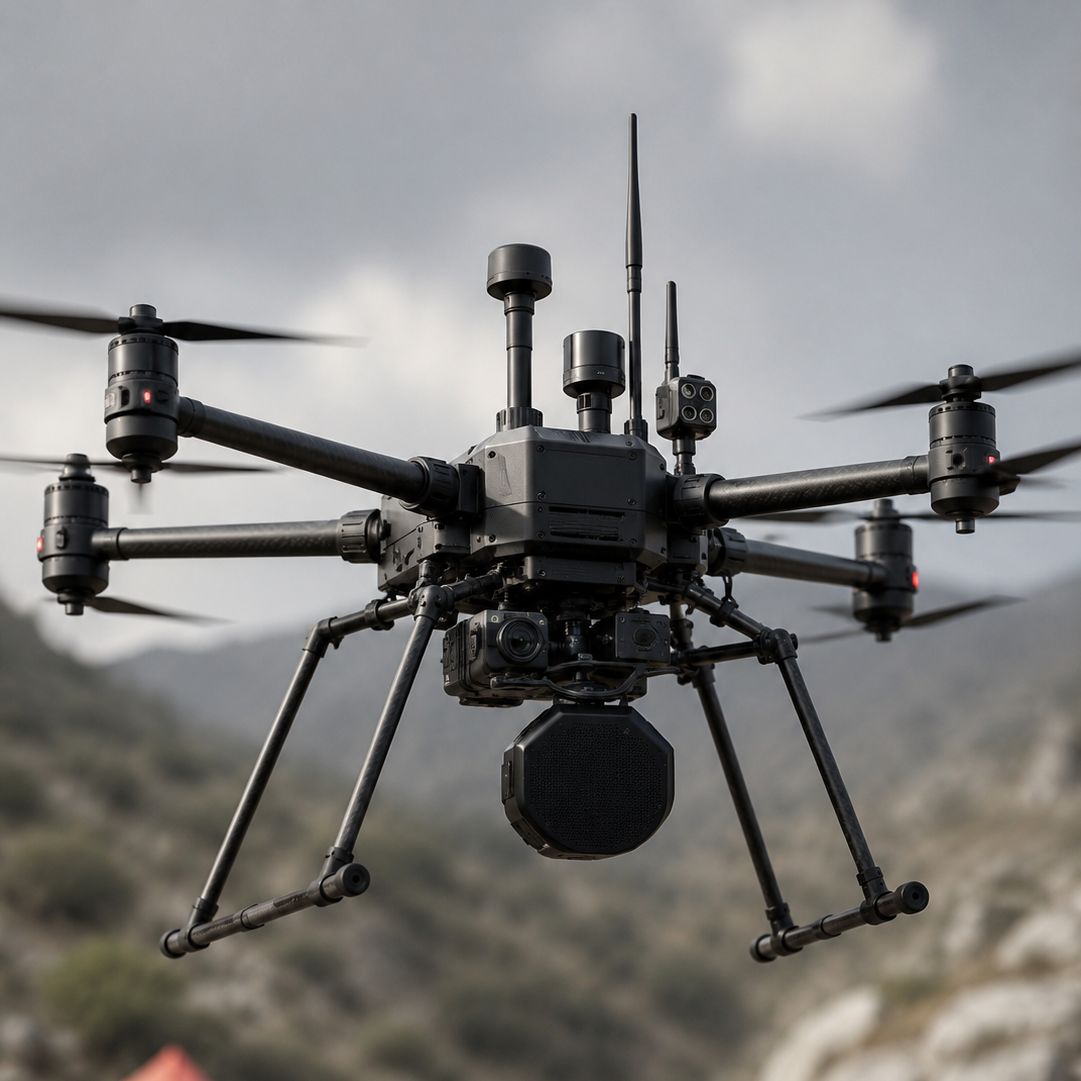
High-dynamic anti-noise harness module
Pain point: Design blind spots of individually purchased cable materials
If cable materials are solely purchased as individual components, the overall compatibility with interfacing hardware (such as spotlight housings and O-Rings) often cannot be assured, which may cause micro stress cracks in interfaces (such as NBR 70A O-Ring) during high-dynamic flights or vacuum verification, leading to waterproof and airtight failures.
Solution
Sub-system Turnkey Pre-assembly:Breaking the blind spot of single-part procurement, we perform pre-assembly of core transmission lines, O-Rings, high thermal conductivity metal heat dissipation sheets, and enclosures at our Taiwan facility, designing from overall compatibility.
Strict DQA quality control before export.Conduct exclusive pressure and fatigue testing directly on the complete pre-assembled module before factory shipment, isolating potential 'flatness friction' and 'air tightness failure' before production export to help clients preserve high-value assembly capacity for core autonomous systems.
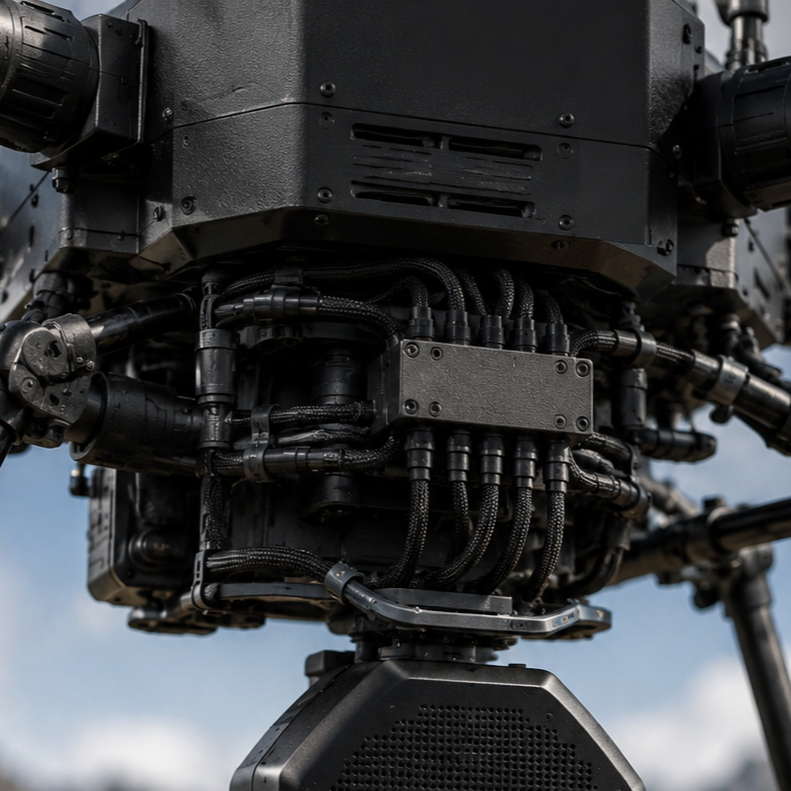
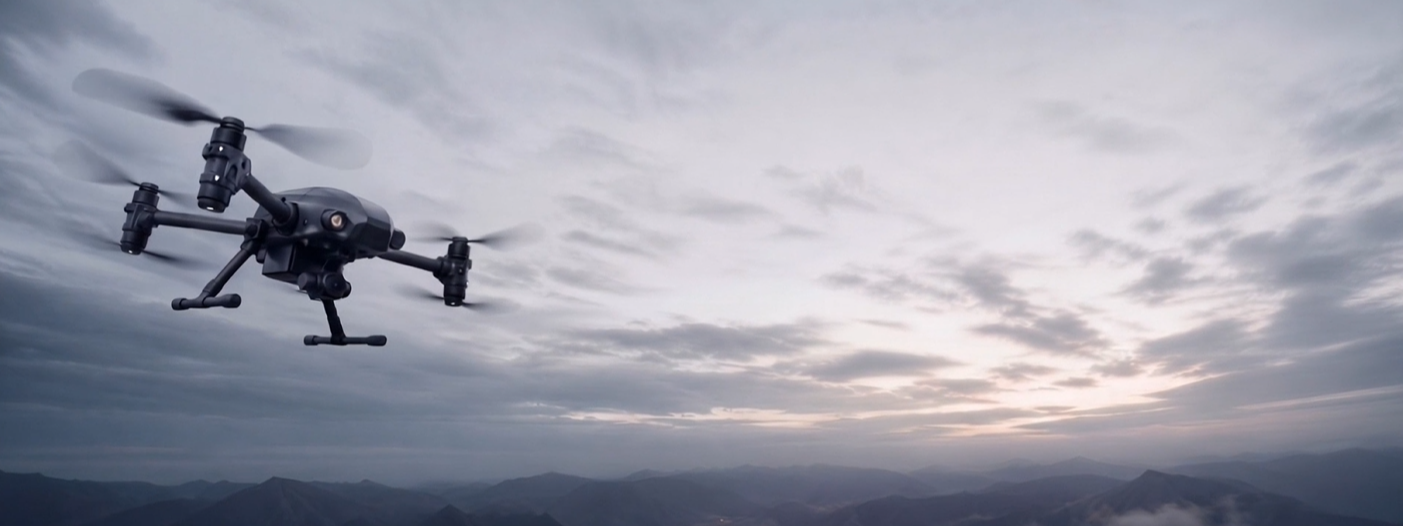
Fragmented outsourcing easily leads to failures and verification failures—a common blind spot in off-the-shelf products. Under Atemitech's turnkey pre-assembly, clients can reduce cross-supplier responsibility attribution and quality friction, preserving high-value capacity for core autonomous systems. Outstanding precision machining technology overcomes structural weaknesses caused by cutting deformation and layered defects, providing aerospace-grade structural components that are high-strength, lightweight, and traceable.

Helping you easily tackle various severe operational challenges