





Success Story – Next-Generation AI Server Mechanical Design
From Co-Design to Manufacturing Excellence: Accelerating Next-Generation AI Server Mechanical Development
Liquid Cooling System for AI Servers
Market Trend
According to technavio research, the liquid cooling for AI data centers market is entering a rapid growth phase, driven by increasing AI workloads, higher thermal design power (TDP), and rising rack power density. The market is projected to grow by approximately USD 2.48 billion from 2025 to 2030, at an estimated CAGR of 31.7%. North America is expected to remain the leading growth region, contributing roughly 34.6% of market expansion during the forecast period, fueled by strong investments in AI infrastructure and the accelerated deployment of hyperscale data centers. Among cooling technologies, direct-to-chip cold plate cooling and rack-level rear-door heat exchangers are both emerging as key growth drivers, with cold plate solutions alone reaching an estimated market value of USD 293.84 million in 2024 driven by its high thermal efficiency and compatibility with existing AI server platforms. Rear-door heat exchangers, the rack-level architecture at the center of this project, are following a parallel growth trajectory as operators seek solutions that retrofit more easily into existing data center infrastructure. As AI systems continue to push computing performance and thermal requirements to new limits, advanced liquid cooling solutions across both architectures have become essential for managing extreme heat loads while ensuring reliability, energy efficiency, and scalability in next-generation high-density AI data centers.
Customer & Project Background
As AI workloads continue to push server rack power density higher, thermal management has become one of the most critical engineering challenges in modern data center infrastructure. A leading Tier-One provider of liquid cooling and AI server solutions based in Europe and the United States was seeking a mechanical engineering partner capable of transforming an advanced cooling concept into a reliable and manufacturable solution. The customer specializes in liquid-cooled AI server infrastructure and required a partner with strong capabilities in mechanical design optimization, thermal integration, and manufacturing process improvement. During the vendor selection process, several mechanical engineering and manufacturing partners were evaluated. Atemitech was selected for its ability to combine innovative structural design capabilities with practical manufacturing expertise, delivering both engineering performance and production efficiency. Through a Co-Work design approach, Atemitech collaborated with the customer to develop system-level mechanical and thermal integration solutions for next-generation liquid-cooled AI servers. By leveraging its expertise in precision mechanical design, structural optimization, and manufacturing engineering, Atemitech helped accelerate the development of advanced AI server cooling platforms.
Atemitech's Technical Expertise
At the core of this project was Atemitech’s Co-Work model, a collaborative R&D-to-R&D design approach where Atemitech’s mechanical engineers worked closely with the customer’s R&D team throughout the development process. Instead of simply executing a predefined design, Atemitech contributed expertise in mechanical integration, structural optimization, design enhancement, and design-for-manufacturability (DFM). This engineering-driven collaboration enabled Atemitech to go beyond a traditional manufacturing role and become a true co-design partner, helping the customer deliver a reliable, scalable liquid cooling solution for next-generation AI servers.
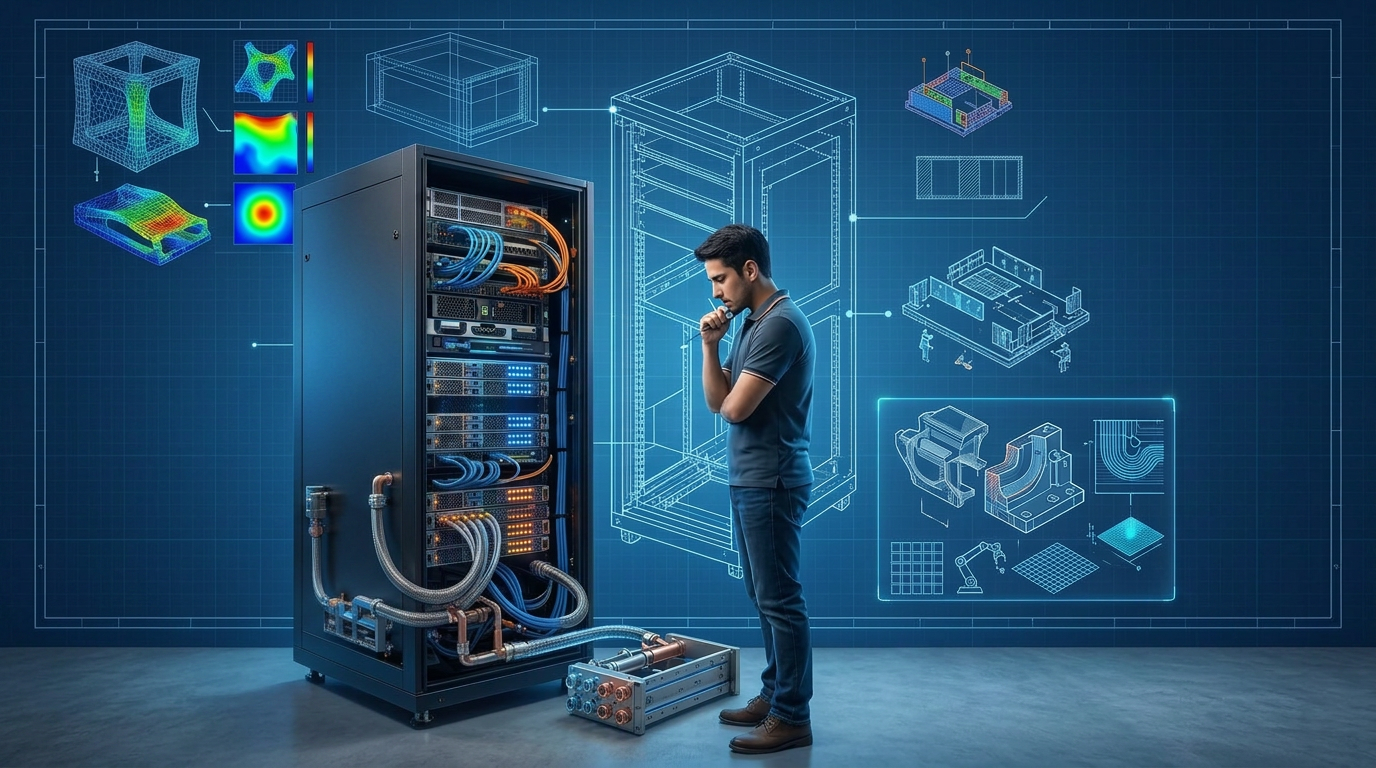
The Challenge: Managing Extreme AI Server Thermal Loads
As AI server power density continues to increase, thermal management and mechanical reliability have become critical challenges. The customer required a cooling solution capable of supporting high-performance AI computing while maintaining structural strength, serviceability, and manufacturing efficiency. The key challenge was balancing multiple requirements, including maximizing cooling performance, ensuring long-term mechanical reliability, simplifying maintenance, and optimizing material usage. Atemitech overcame these challenges through structural optimization, material evaluation, and rigorous engineering validation, delivering a solution that balances performance with practicality.
The Solution: Optimizing Liquid Cooling System Design
Atemitech optimized the integration between the AI server and the liquid-cooled rear-door heat exchanger by adopting a dedicated rack-level cooling architecture. To improve system reliability and maintenance efficiency, Atemitech reinforced the structure supporting the 80 kg pump assembly with optimized load paths and an internal frame design. A customized slide-rail mechanism was also developed to simplify pump replacement and reduce service downtime. In parallel, Atemitech optimized the base plate structure through lightweight design and material optimization, reducing system weight and material costs while maintaining required mechanical strength. Throughout the prototyping phase, Atemitech continued supporting the customer through its R&D-to-R&D collaboration model, providing continuous engineering feedback, DFM improvements, and manufacturing optimization. This flexible approach helped accelerate product development, enhance production efficiency, and support successful validation, including customer-arranged UL certification testing.
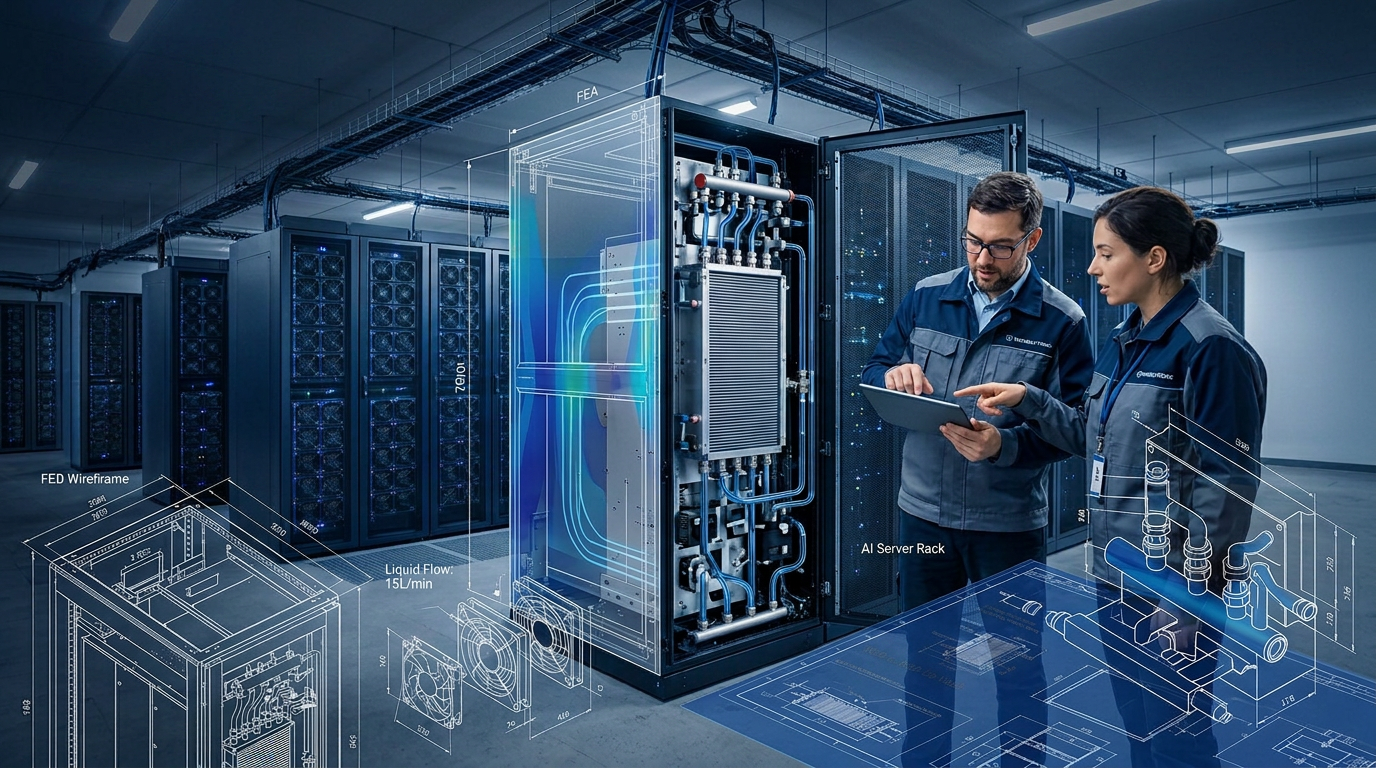
Measurable Results
The collaboration delivered the following key improvements, validated through engineering validation and testing:
l Enhanced product precision and surface quality
l Improved structural strength through additional reinforcement
l Optimized support structures and assembly processes
l Reduced assembly time and improved manufacturing efficiency
Atemitech also introduced robotic manufacturing processes to improve production consistency and dimensional accuracy. Beyond the mechanical enclosure, Atemitech expanded the collaboration to support additional accessories and industrial Panel PC platforms, demonstrating its ability to provide broader system-level support.
Delivering Value Across Engineering, Manufacturing, and Project Management
This project illustrates the full range of value Atemitech brings to complex mechanical engineering programs. On the technical side, Atemitech combines structural design, integration, materials engineering, and precision manufacturing — including robotic manufacturing automation — to solve problems that go well beyond simple fabrication. On the procurement side, Atemitech's DFM expertise and flexible manufacturing capacity help customers manage MOQ constraints and reduce inventory risk even during frequent design iterations. And on the project management side, the R&D-to-R&D Co-Work model ensures that engineering changes are absorbed quickly and communicated seamlessly between design and production teams, keeping development timelines on track. For a Tier-One liquid cooling and AI server provider navigating the industry's transition toward extreme power density, Atemitech proved to be more than a mechanical supplier — it became a co-engineering partner capable of transforming complex thermal and structural challenges into scalable, manufacturable solutions.
Related information
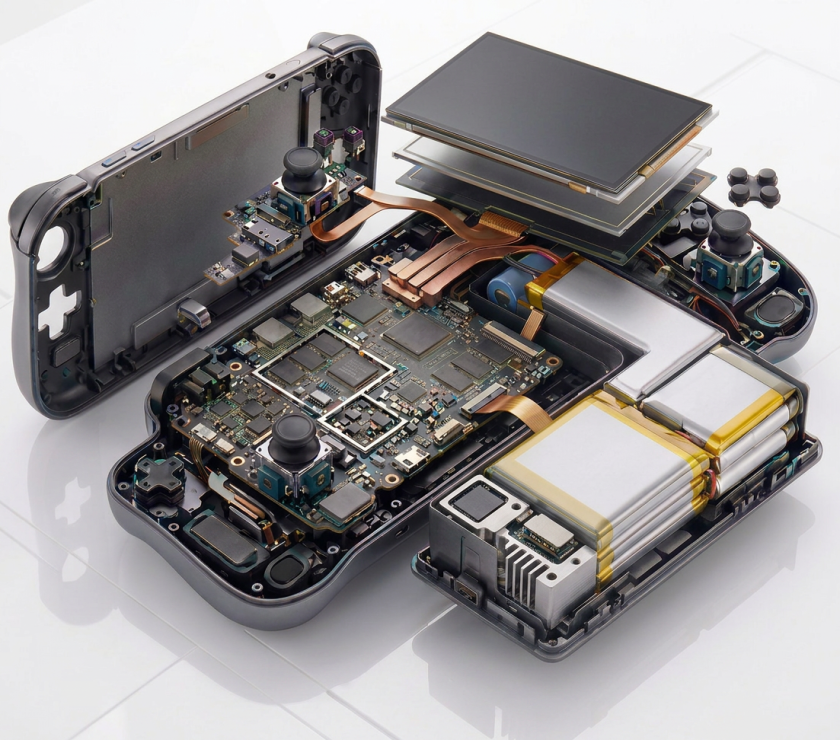
Success Story – Overcoming Space Constraints with a High-Performance Battery Solution for Handheld Gaming Devices
As portable entertainment devices become more powerful, limited space and battery life become key challenges. Atemitech addresses them with customized battery solutions.
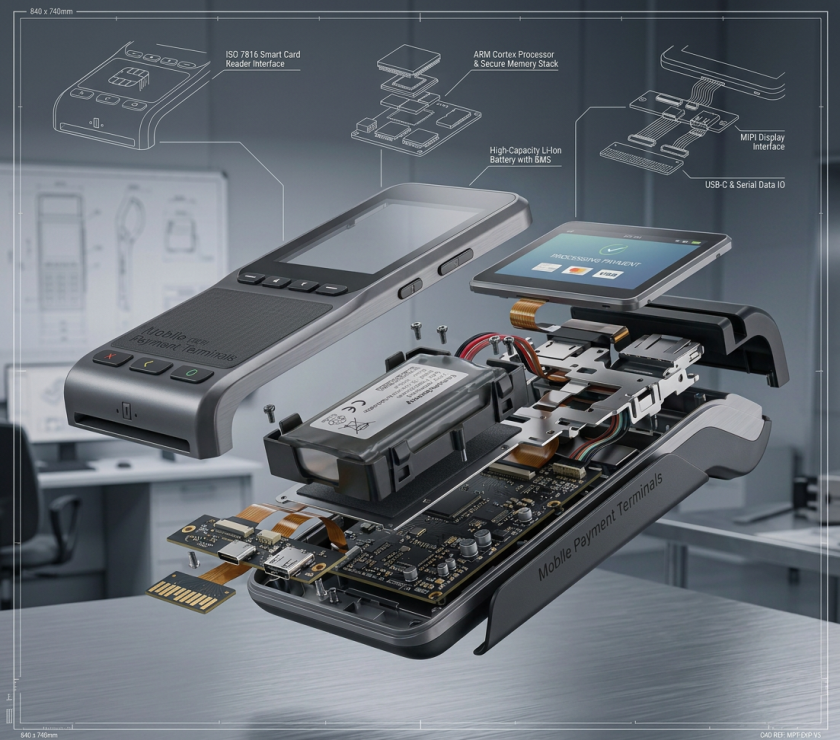
Success Story – From Battery to System: Building a Reliable Power Solution for Mobile Payment Terminals
As mPOS adoption grows, mobile payment terminals require longer battery life, reliability, and efficient space utilization. Atemitech optimized battery capacity within existing space constraints and integrated the battery, mechanical structure, and charging system to deliver a reliable, production-ready power solution.
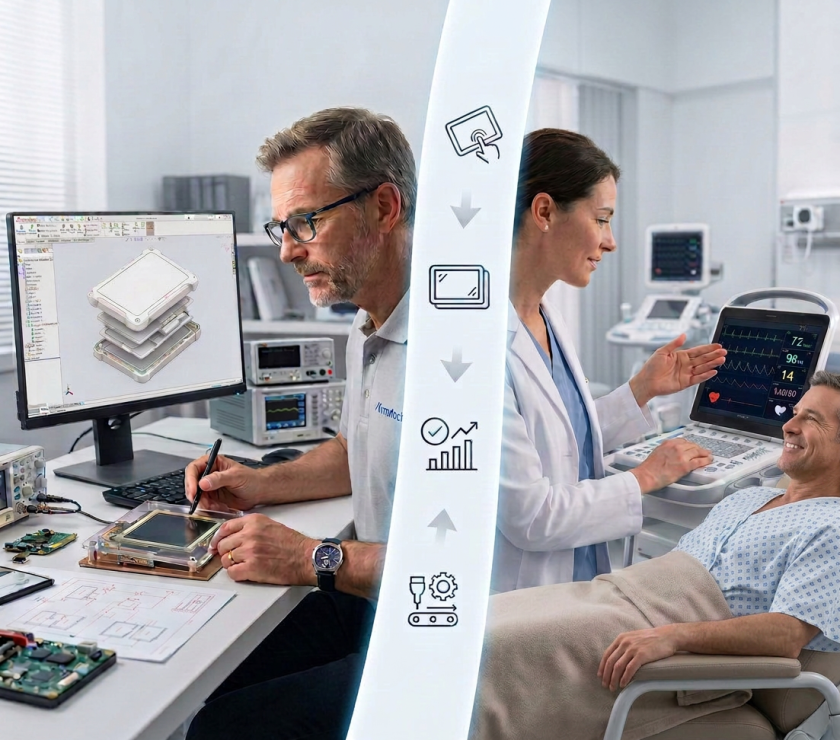
Success Story – A Decade of Engineering Medical Innovation
For nearly a decade, Atemitech has partnered with a leading global healthcare company to develop advanced medical touch display solutions. Backed by ISO 13485-certified quality management and engineering expertise, Atemitech delivers reliable, innovative solutions that help customers build safer and smarter next-generation medical devices.