





Success Story – Explosion-Proof Solutions for Hazardous Environments
Engineering Safety Where It Matters Most: How Atemitech Entered the Industrial Explosion-Proof Market
Developing a flame-proof device enclosure for hazardous oil-and-gas environments
A High-Stakes Arena
In oil and gas operations, petrochemical plants, and other hazardous environments, even the smallest spark can have catastrophic consequences. A flammable gas atmosphere can turn ordinary equipment into a potential ignition source. In these settings, a mobile device is not merely a productivity tool but a potential ignition source — its battery, circuitry, heat, or micro-sparks can all ignite surrounding combustible gases. The result is not only damaged assets and operational disruption, but also risk to human life. This is the demanding environment Atemitech entered with its first major explosion-proof project: a flame-proof tablet enclosure designed to keep field personnel connected without compromising safety.
A New Customer with Stringent Requirements
The customer was a North American brand specializing in rugged device protection, seeking a partner to develop an explosion-proof tablet case for hazardous oil-and-gas environments. The product needed to serve as a safety-critical barrier while meeting strict international explosion-protection regulations. As with many first-time engagements, the project began with the customer evaluating multiple suppliers in parallel. Atemitech stood out for its strength in structural design and prototype validation. As discussions progressed, initial interest evolved into a focused, collaborative development partnership. From the outset, the requirements were clear and uncompromising: the enclosure had to comply with the IEC 60079 series of explosion protection standards. This was not simply about making a thicker or tougher case, but about engineering a solution that prevents a device from becoming an ignition source while fully preserving its communication and operational functions in the field.
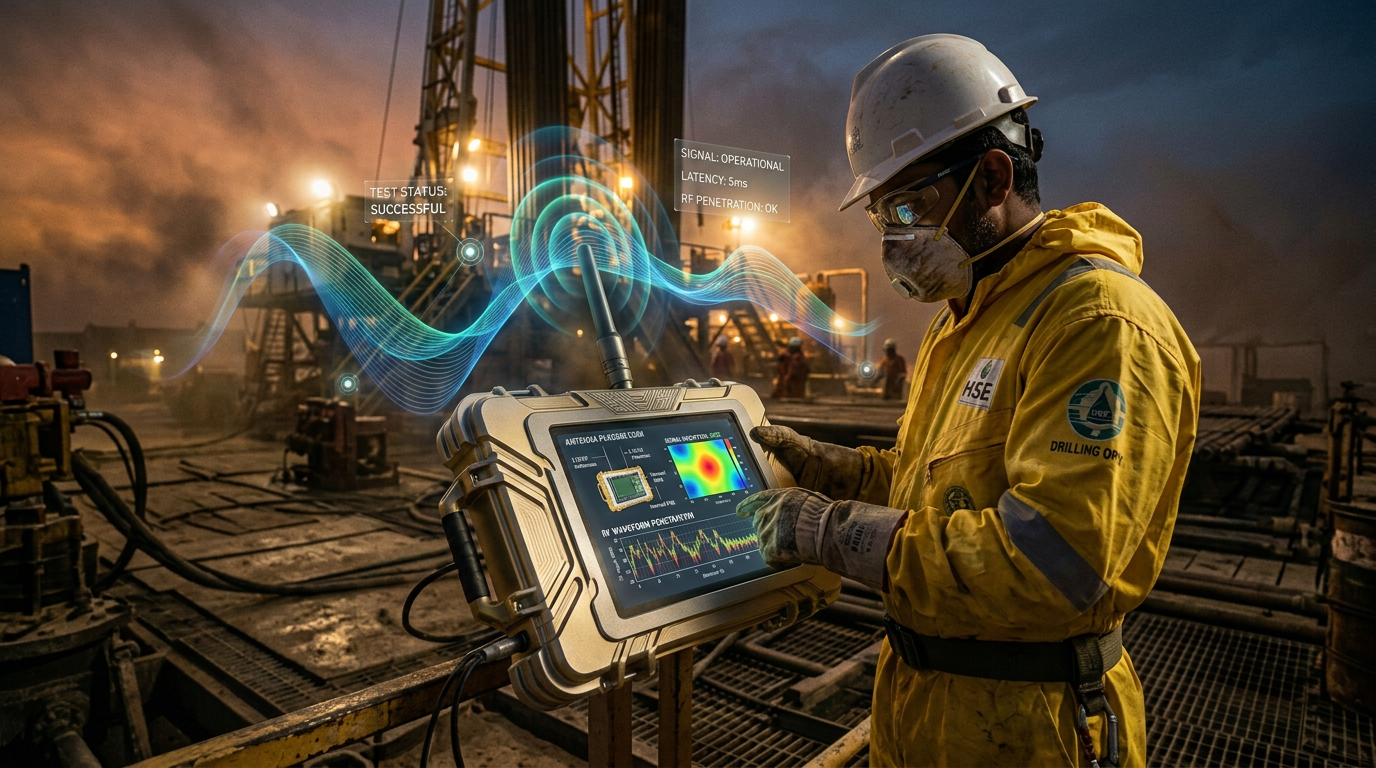
The Core Engineering Challenge: Safety Versus Function
The central difficulty of the project was not simply adding protection, but reconciling two requirements that naturally pull against each other. On one side stood explosion-proof safety: the enclosure had to block any potential internal ignition source from reaching the external oil-and-gas atmosphere, meaning that even if the internal tablet generated a spark, the flame path design and structural configuration had to isolate it from the external environment and prevent it from escalating into a larger incident. This required carefully designing the flame path and ensuring that the structure could contain and arrest any internal event. This is why flame-path design and machining precision became primary test criteria. The internal geometry that governs flame and pressure propagation is fundamental to certification requirements. On the other side stood usability: if the enclosure were sealed too aggressively, or if inappropriate materials were chosen, the very design that delivered safety would degrade the device’s wireless communication and operability, rendering the product impractical for real-world applications. Materials were therefore at the core of this conflict, as glass, metals, and other components each behave differently under explosion-protection requirements, with metal in particular interfering with wireless signal performance. Atemitech addressed this challenge through repeated cycles of material sourcing, testing, and process optimization to ensure that the final combination met explosion-proof safety standards without sacrificing functional performance.
Addressing RF Signal Attenuation Challenges
The signal challenge deserves special attention, because it is where the project's engineering discipline truly showed.
Metal housings are excellent for mechanical robustness but problematic for radio-frequency performance. To overcome this, Atemitech had to find the optimal balance between mechanical structure and antenna configuration. Through multiple rounds of testing and tuning, the team succeeded in keeping signal attenuation within 15 percent — maintaining 85 percent or more of signal quality — while deliberately positioning the antenna away from metal areas of the housing to maintain stable RF performance and reliable wireless connectivity. This balancing act between flame containment requirements and RF performance distinguishes a genuine explosion-proof solution from a merely rugged case.
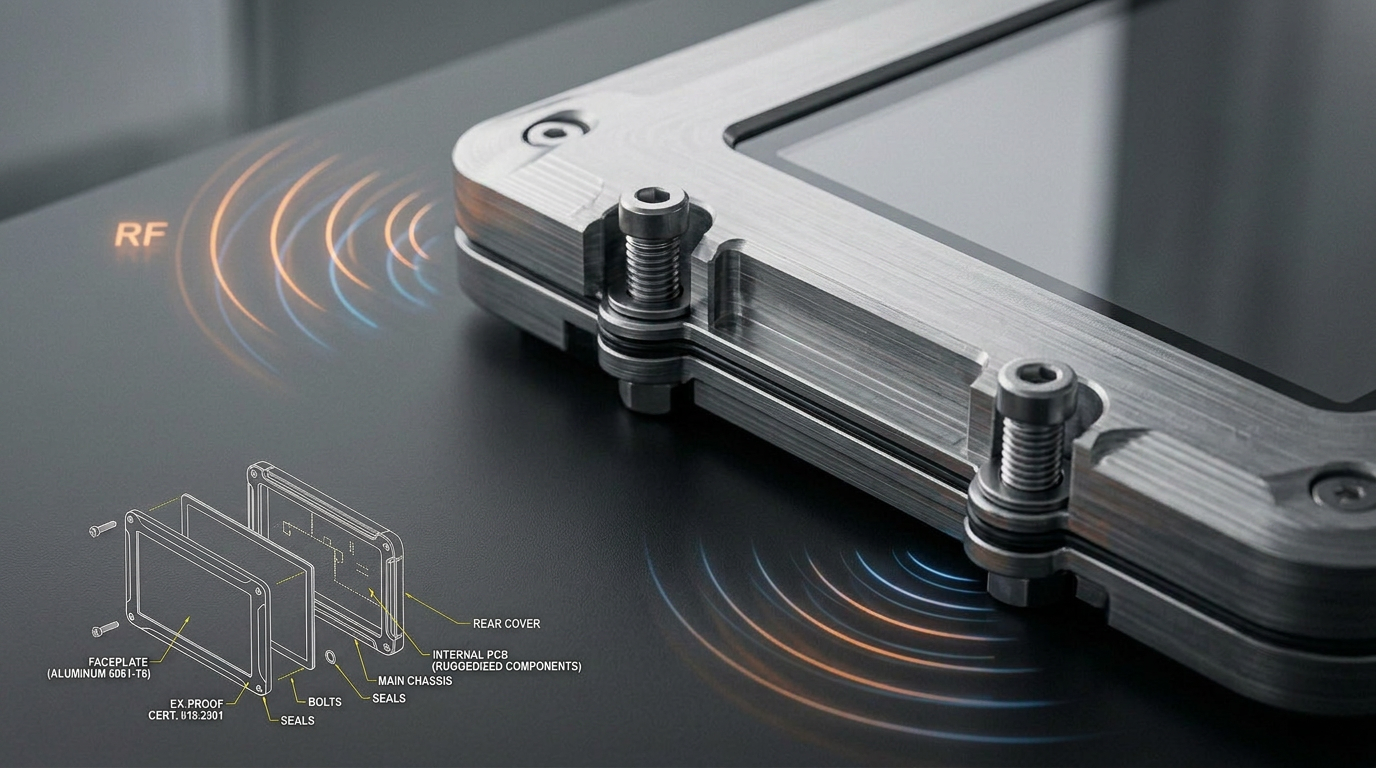
The Atemitech Solution, End to End
Atemitech's involvement spanned the full development arc. Starting from the customer's initial concept and exterior vision, the team led the primary structural design, drove material selection, produced and refined prototypes, and ran verification — all while coordinating closely with a certified safety laboratory to complete the required explosion-proof testing.
The result is a flame-proof enclosure that serves as a safety barrier: it prevents the tablet from forming an ignition source capable of igniting surrounding combustible gases, while retaining the communication and operating functions the device was built for. In effect, Atemitech delivered a product that protects both the equipment and the people who depend on it.
Certifications and Results
The finished product reflects the breadth of validation it underwent. According to the customer's official product page, it carries global and regional certifications including IECEx, ATEX Zone 1/21, and TS flame-proof certification, and is designed to meet the requirements of the IEC 60079 international explosion-protection standard series.
Beyond explosion protection, the enclosure achieves an IP68 rating for complete dust and water resistance, passes the MIL-STD-810H military standard for drop protection, and offers chemical-corrosion resistance — ensuring stable operation under the extreme conditions of demanding industrial work sites.
Critically, the product successfully passed its explosion-proof safety testing and completed first-batch delivery. The collaboration not only produced a market-ready product; it built a foundation of shared experience between the two companies in developing explosion-proof mobile-device enclosures.
Project Impact and Key Reflections
Some projects are remembered for their numbers; this one is remembered for its meaning.
Customer’s senior product manager asked a question: “What makes you happy in your life?”.
For the Atemitech team, it came down to one clear answer: contributing to a product that helps save lives. In hazardous environments where engineering precision directly impacts safety, even minor design choices matter. This project highlighted the value of work at the intersection of rigorous engineering and real-world protection.
A Growing Market
According to Grand View Research, the global explosion-proof equipment market was valued at USD 8.6 billion in 2025 and is projected to grow from USD 9.1 billion in 2026 to USD 13.5 billion by 2033, representing a CAGR of 5.8% over the forecast period. North America accounted for the largest regional market share at 30.4% in 2025, reflecting its stringent industrial safety regulations and mature hazardous-area infrastructure. Market growth is expected to accelerate as regulatory requirements and safety standards in hazardous environments continue to tighten globally. By protection method, the explosion prevention segment held the largest share at 53.8% in 2025, while by industry, oil and gas remained the dominant application segment with a 29.2% market share, highlighting its critical role in driving demand for explosion-proof equipment.
Related information

Success Story – A Decade of Engineering Medical Innovation
For nearly a decade, Atemitech has partnered with a leading global healthcare company to develop advanced medical touch display solutions. Backed by ISO 13485-certified quality management and engineering expertise, Atemitech delivers reliable, innovative solutions that help customers build safer and smarter next-generation medical devices.

Success Story – Next-Generation AI Server Mechanical Design
Atemitech partnered with a Tier-One AI server and liquid cooling provider to co-develop a next-generation rack-level liquid cooling solution for high-density AI data centers. Through its R&D-to-R&D Co-Work model, Atemitech optimized mechanical design, enhanced thermal integration, and applied Design for Manufacturability (DFM) principles to accelerate product development and streamline production. The collaboration improved structural reliability, manufacturing efficiency, product quality, and assembly processes. By combining engineering expertise, precision manufacturing, and effective project management, Atemitech transformed complex thermal and mechanical challenges into scalable, production-ready solutions, reinforcing its position as a trusted engineering partner for next-generation AI infrastructure.
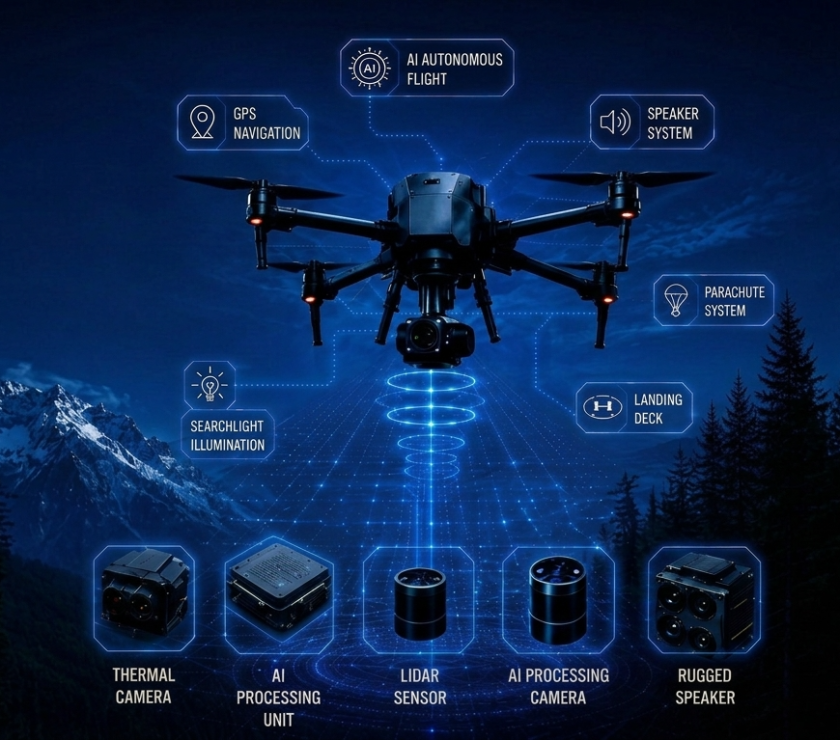
Success Story – UAV Payload System
In the defense and public safety sectors, UAVs must perform reliably in demanding environments, including nighttime operations, long-duration missions, and complex field conditions. Atemitech leverages advanced thermal management, acoustic system integration, and precision optical control technologies to help North American UAV manufacturers develop reliable, high-performance payload solutions that meet mission-critical requirements and enhance UAV effectiveness in search and rescue, inspection, and public safety applications.